How one dispensary replaced three tools and grew retention in 90 days.
We walked through a representative migration playbook, drawn from operator interviews, what gets ripped out, what gets kept, and the one mistake to never make again. Figures are illustrative.
Take a single-store dispensary in Portland, OR, the kind we talk to constantly, running marketing through three separate tools. Klaviyo handled email. Attentive handled SMS. A homemade Airtable held loyalty balances, synced via a Zapier chain that broke, on average, twice a week. Within a quarter, all three were gone, retention had climbed meaningfully, and the marketer was sleeping again. The story below is a composite drawn from operator interviews; the figures are illustrative.
Here is exactly how an operator does it, not the tidy case-study version, but the real one, with the broken POS sync and the Klaviyo segment that took a weekend to rebuild. It is the playbook, warts and all.
The stack before
Before Sticky, this kind of marketing surface is, as one operator put it, "a giant if-statement nobody understood anymore." The architecture was load-bearing duct tape:
- Klaviyo for email, with eight different exclusion segments to avoid sending cannabis-promo content to flagged subscribers.
- Attentive for SMS, gated behind a separate signup form and a separate consent flow.
- Airtable + Zapier as the loyalty system of record, balances synced to Dutchie POS once an hour, mostly.
The biggest issue wasn't tooling. It was that no two systems agreed on who a customer was. A customer might exist in Klaviyo with one email, in Attentive with a phone number, and in Airtable with a third identifier. Match rates were guesses.
I once sent a 20%-off email to a customer who had unsubscribed in Attentive 14 months earlier. He drove 30 minutes to redeem it. Then he called me to complain. - Composite operator account
Why she switched
This operator didn't go shopping for new tools. The trigger was the Oregon OLCC's expanded notice requirements in late 2025, new rules about what cannabis SMS could and could not contain, with penalties scaling per-message. Her existing SMS provider didn't have a cannabis-aware compliance layer; every message had to be reviewed manually before send.
"I was spending three hours a week on copy review for a single send," she told us. "And I still wasn't confident."
She evaluated three vendors: SpringBig, Alpine IQ, and Sticky. SpringBig and AIQ had cannabis-specific features but priced like enterprise software. Sticky, which she'd seen mentioned in a benchmark report, had a free migration program and would handle the SpringBig-style switch in under two weeks.
The first 30 days
The migration playbook in this account mirrors the template our solutions team gives every new switching customer. Here's how the first 30 days actually went:
- Week 1. List + balance migration. Sticky exported from Klaviyo and Airtable, ran phone/email matching, and produced a single unified customer table. Match confidence per record was visible in the dashboard.
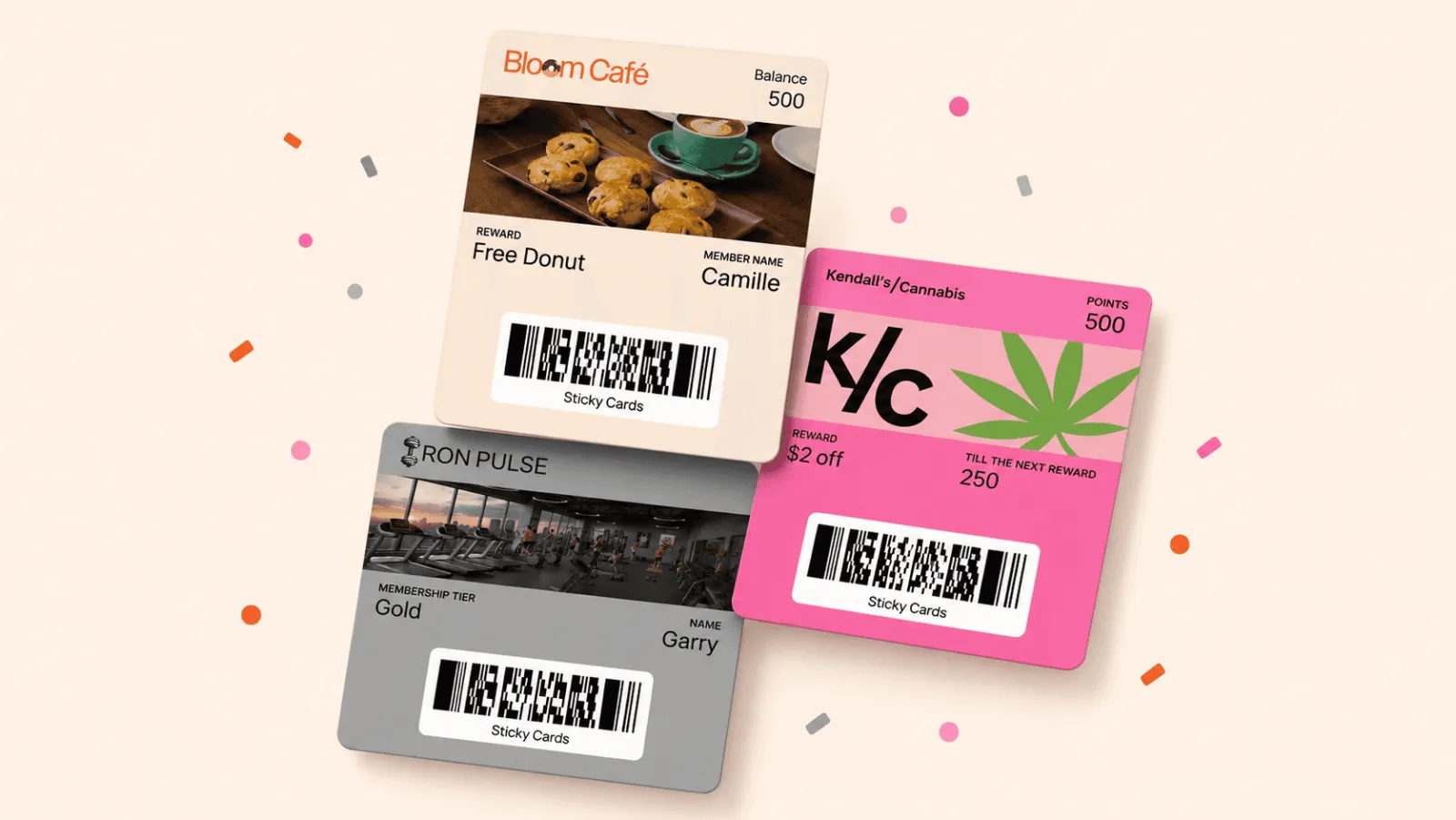
- Week 2. Wallet pass mint. Every loyalty member got an Apple/Google wallet pass via SMS. most installed within the first few days.
- Week 3. Journey rebuild. Welcome series, lapsed-customer winback, and a birthday flow, all moved from Klaviyo's flow editor into Sticky's Playmaker.
- Week 4. First fully-Sticky send to the entire list. Open rates improved versus the prior six-week average in Klaviyo.
What the data showed
Three months in, the numbers were unambiguous. The headline isn't the open-rate bump, it's what happened to repurchase frequency.
The one mistake she'd never make again
This operator didn't migrate her email creative library. She rebuilt every template from scratch in Sticky's editor, partly because the Klaviyo HTML was, in her words, "a mess only the agency understood." It cost her an extra week.
"If I did this again," she said, "I'd export the templates as MJML and let Sticky's import handle them. It would have saved a weekend of my life. Don't be a hero."
The operator's playbook
Here are the rules operators tend to follow now, post-migration. Here they are, lightly edited:
- Phone is the customer ID. Email is a channel preference, not an identity.
- Wallet first, email second. Open rates on a wallet push are 4× email's. Use email for context, wallet for urgency.
- One journey, two paths. Every flow has a "consented to SMS" path and an "email-only" path. Never one without the other.
- Compliance review happens at template level. Not at send time. If your tool can't enforce that, change tools.
- Measure repurchase, not opens. Opens lie. POS-attached revenue doesn't.
List + balance migration, journey rebuild, and wallet pass mint, all included. Switch costs zero.
Get a switch quoteTakeaways
If there's one through-line in this story, it's that retention is a tooling problem before it's a strategy problem. The operator didn't change her offers, her promotions, or her cadence. She just made it possible for one customer to actually be one customer across email, SMS, and loyalty, and the strategy she'd already had started working.
Most of the dispensaries we talk to are running some version of this pre-migration stack. The figures in this story are illustrative, but they're in line with the kind of lift we see when an operator consolidates onto Sticky. Our 2026 benchmarks report has the full distribution, if you want to see where you'd land.
Sticky Editorial covers cannabis compliance, retention, and operator interviews. Got a story to share? Drop us a line.
See Sticky in action.
Book a 30-minute demo. We’ll migrate your old platform for you — lists, templates, loyalty balances and all.
Book a demo